Enhancing the quality of water for hatchery operations
Fisheries and Oceans Canada (FOC) operates a fish hatchery in British Columbia alongside Snootli Creek near Hagensborg, a village located east of Bella Coola. This facility enhances the viability of wild fish populations in the area.
The hatchery features small and large tubs and rearing ponds, as well as a hatchery complex for various species at different stages of development throughout the year. These rearing facilities are supplied with water from both Snootli Creek and from nearby groundwater wells. A benefit of the well water is that it is typically cooler than creek water, particularly in the summer and autumn. However, well water needs to pass through an aeration facility to reduce the concentration of dissolved gases, and to increase its content of atmospheric oxygen.
FOC engaged Ausenco to help with its water supply needs, and to design the aeration facility to service the hatchery. The client provided our team with information on the amount of water required for various species at different development stages throughout the year. We were then able to determine the total flow requirements for each period of the year to each destination, and combination of destinations.
Our scope of work included calculating the diameter of the water supply pipe that was needed from Snootli Creek to meet the water requirements. Our team then utilized PipeFlo to determine the pipe diameters for flows from the groundwater wells via the aeration facility to the various destinations. We also calculated the diameters of the distribution piping from the aeration facility to the fish rearing destinations, and the elevation required for the small, buffer-storage reservoir to provide the necessary pressure to generate the flows.
In addition, our team designed the aeration facility with elevated reservoir and multiple outlet pipes, and a top level, unique distributor tray for the aeration pots.
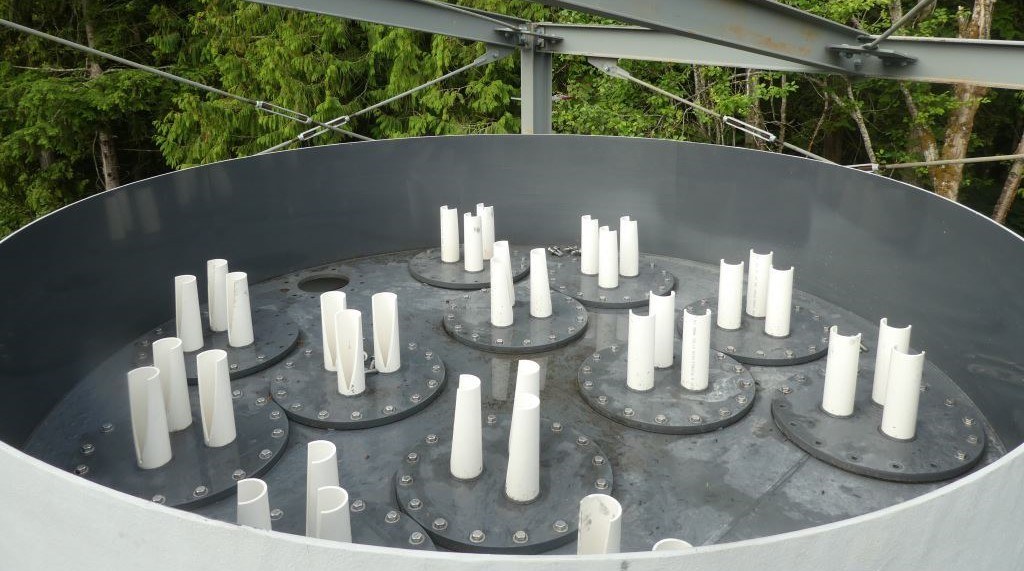
Uniform Flow Distribution Tray for Aeration
The top-level distributor tray separates the inflow into 12 vertically-downward columns of outflow, each with three separate streams for a total of 36 uniform flow streams. The flow in each stream is equal regardless of the rate of inflow to the tray. This equal flow distribution was able to be achieved without any flow metering or electronic controls.
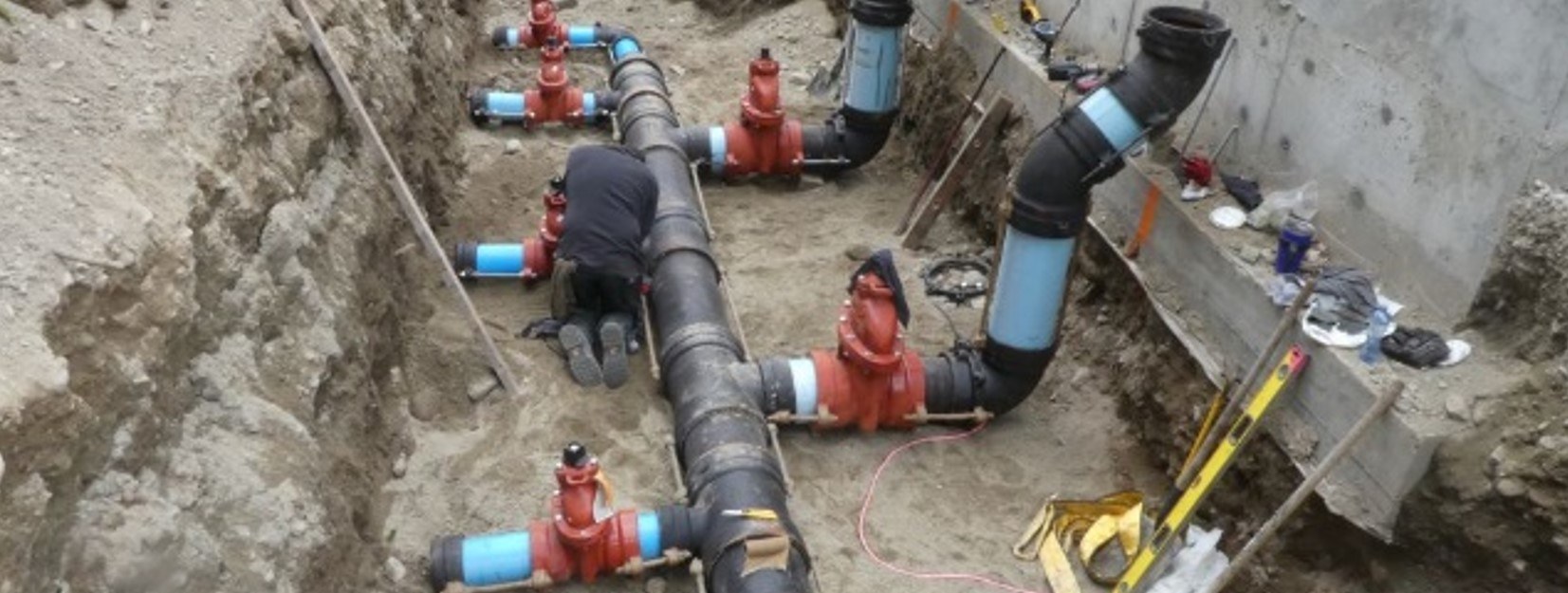
Buried collector manifold from the five wells to the riser pipes
At the ground level, there is a buried manifold that “collects” the pipeline flows from five separate wells, with an allowance for a sixth well inflow. The well water is conveyed to the top-level distributor tray through two riser pipes connected to the discharge side of that buried manifold.
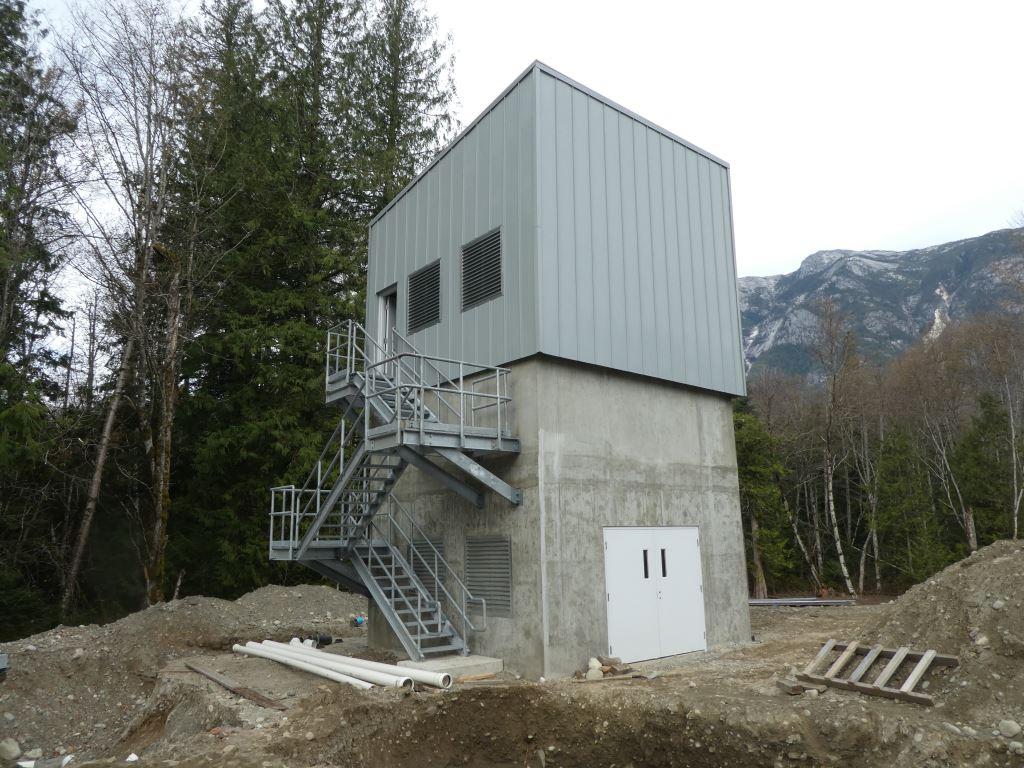
Ground floor valve room supporting the mid-level reservoir under the aeration floor
The aeration facility itself is a reinforced concrete structure at the ground and reservoir levels. Above that at the aeration level is a metal clad, steel frame structure with a simple shack roof. Large louvers allow natural ventilation through the structure at the ground and aeration levels, based on the fairly consistent wind in that area from the north.
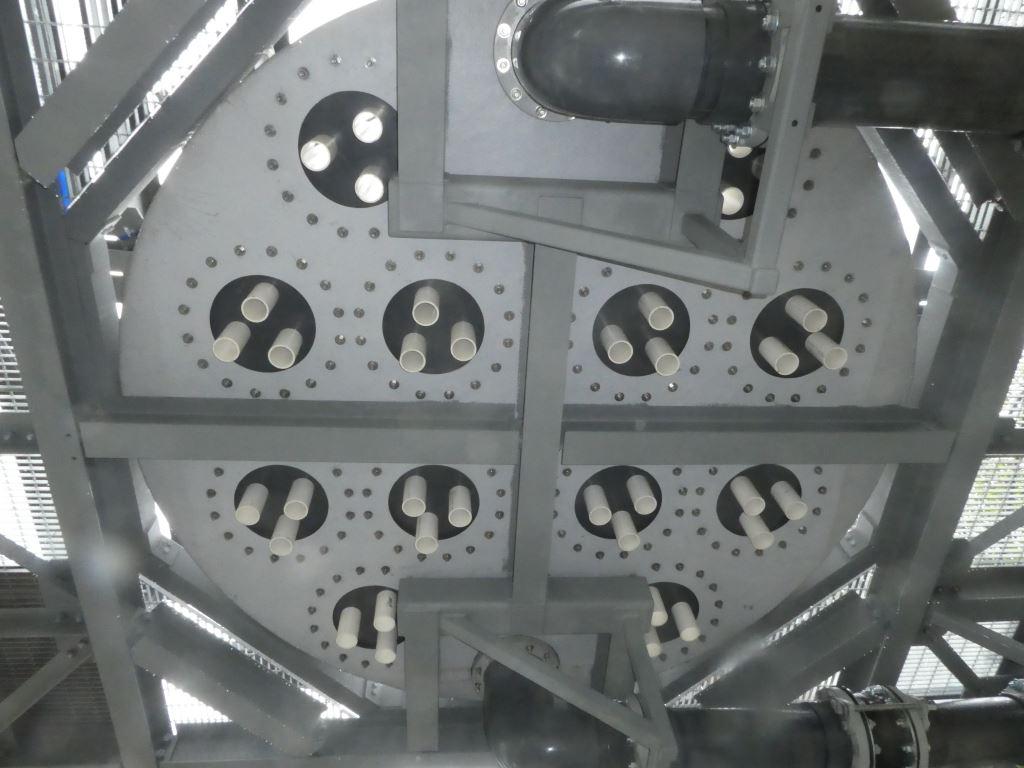
Uniform distribution tray for aeration (underside)
Ausenco provided mechanical engineering modelling and design services, as well as structural design services for the aeration facility. Our team closely monitored the construction using photographs, test results, and regular progress meetings at the site.