Experienced professionals often say that mining is logistics. After all, resources are often found in places that lack the infrastructure for transport. In fact, it is almost always necessary to create an entire logistics chain for the transport of materials. The LHG Mining project is the purest embodiment of this maxim, requiring the transport of iron ore from Corumbá in Mato Grosso do Sul, in the Central-West of Brazil to the nearest port for ships 2,500 kilometres away, along the La Plata river shared by Uruguay and Argentina. Ausenco was the company hired to tackle the challenge of designing and implementing logistics for this project.
The iron ore mined on this project is of the highest quality. Processing is straightforward, consisting mainly of crushing and screening. The major challenge lies in the logistics of transporting the ore by barge along the Paraguay-Paraná Waterway until it reaches the ocean, where the ore is then transferred to ships to complete the journey to the customer. This logistics complexity demands a systemic approach. Ausenco not only understood the scale of work, but positioned itself as a strategic partner from the early business case stage, doing its utmost to design a complete solution that extends “from the mine to the port” and ultimately, to the global market.
“We have been working with LHG Mining since the project began in April 2023. The initial scope went far beyond isolated aspects of the operation,” says Ausenco Ports and Logistics Senior Manager Luís Chinaglia. “We sought to understand the bottlenecks, the river dynamics, the inherent risks and the infrastructure required for production. This holistic view allowed us to assess the total costs of the logistics project — both in terms of initial investment (CapEx) and operating expenses (OpEX) — for the complete infrastructure,” he adds.
The ore’s journey
LHG Mining is set to expand its production capacity at the high-grade iron ore mines in Corumbá. To do so, it was necessary to assess the capacity of the Paraná-Paraguay waterway for the expansion, and how the ore will be transported.
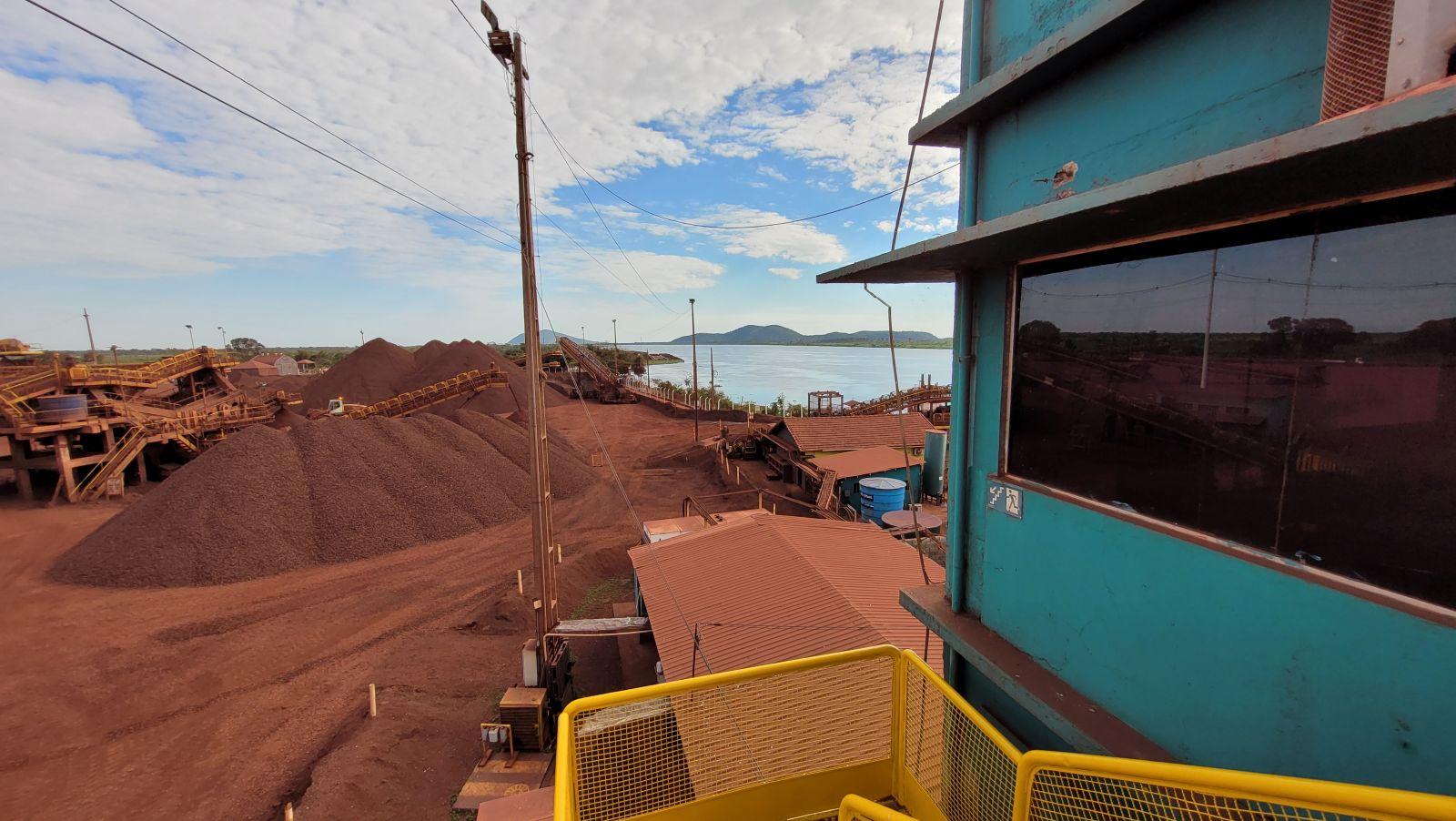
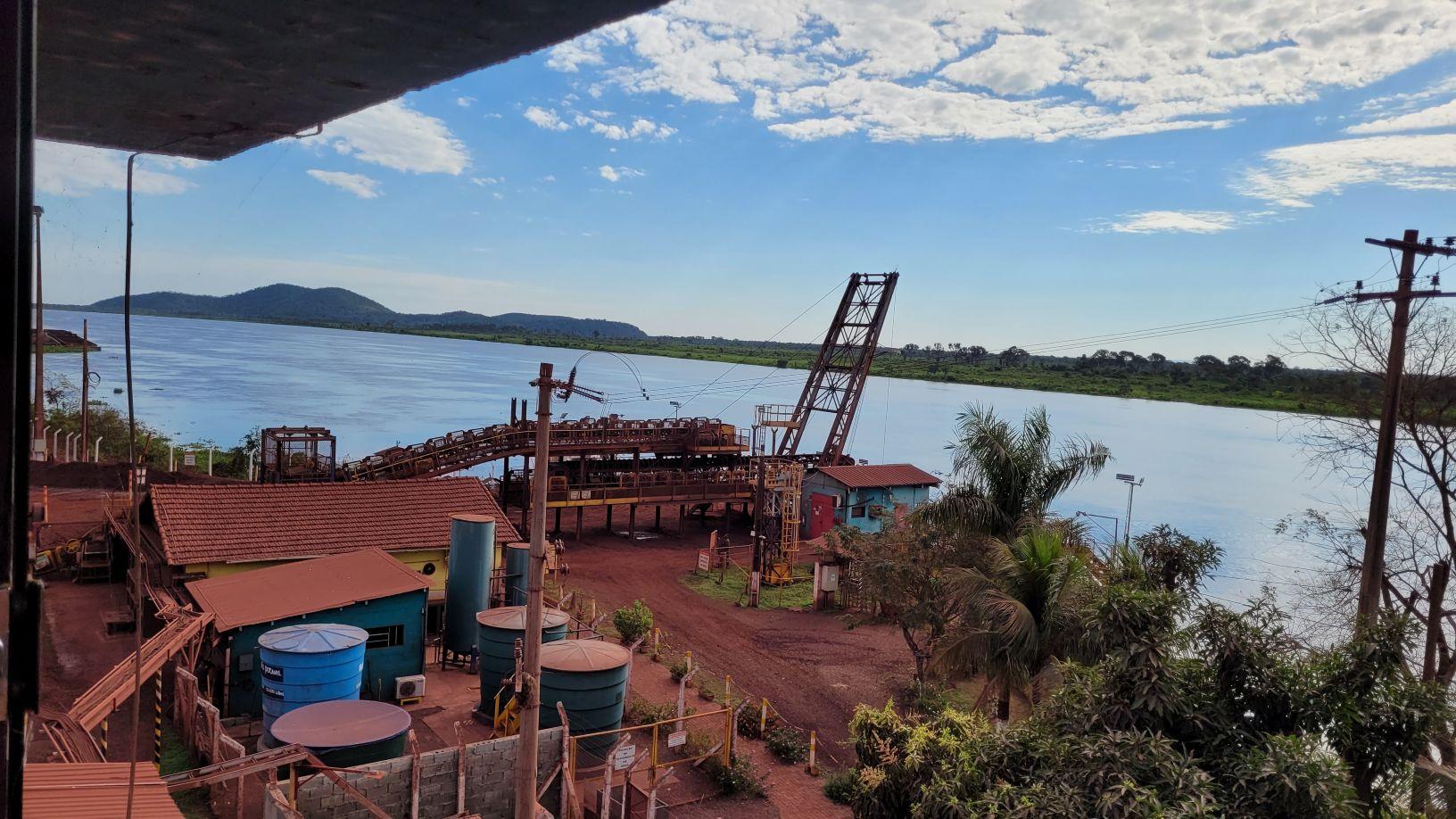
The iron ore leaves the Santa Cruz and Urucum mines in Corumbá (MS) and is transported by rail to two river ports on the Paraguay River: Porto Gregório Curvo, owned by LHG Mining, and the partner port Granel Química, where it is loaded onto river barges, which are then assembled into convoys. The convoys sail approximately 2,500 kilometres to the port of Nueva Palmira in Uruguay, where the material is transhipped onto larger vessels. Subsequently, in the La Plata Delta wetland, transhipment operations are also carried out on the high seas, where capesize vessels are loaded with up to 180,000 tonnes of ore. This current model, designed with the help of Ausenco, has been gradually expanded and is still being implemented.
Returning to the question, “what is the waterway’s capacity?”, Ausenco conducted an in-depth study of the waterway’s dynamics and export capacity. LHG Mining transports iron ore via convoys of 16 barges, which occupy a space 60 metres wide by 250 metres long (covering an area larger than two football pitches). The study detailed all the critical sections of the waterway that require complex manoeuvres, the breaking up of convoys, and crew experience needed. This made it possible to understand the river’s dynamics and its limitations, taking into account navigation dynamics and existing restrictions.
With this understanding, it was then necessary to assess the logistical dimensions of the other structures, such as the ports, for example. The expansion of the existing port has a layout designed to be lean, delivering operational and environmental benefits. The pier’s loading structure will have four berths with radial-type loaders and floating mooring systems for the barges. This solution has enabled us to achieve a reduction of over 30% in CapEx for implementing the river-based ore loading infrastructure.
Other significant gains, in line with Ausenco’s holistic approach, included a substantial reduction in port stock and an improved rail transport configuration. “These improvements are only possible with a comprehensive view of the project’s logistics,” explains Chinaglia. These improvements mitigate critical issues within a logistics system, such as inventory levels and downtime during operations.
Multidisciplinarity
One of the pillars of Ausenco’s systemic approach to the LHG Mining project is cross-functional collaboration. The company mobilised a multidisciplinary team, bringing together specialists to ensure a comprehensive analysis of all aspects of the project. Environmental professionals were involved, as were asset management specialists, who, for example, contributed to the standardisation of equipment across all the client’s operations, which led to gains in spare parts inventory management. Virtually all of Ausenco’s engineering disciplines – from Brazil, Canada and Chile – were involved, demonstrating the company’s ability to bring together talent from different offices towards a common goal. “Our integration of knowledge has allowed us to anticipate problems and optimise processes in ways that isolated solutions could never achieve,” says Chinaglia.
A practical example of the application of this systemic approach is evident in the investment planning and project phasing. Ausenco developed a model in which investment is phased and the ramp-up of operations is gradual. Rather than building the entire port infrastructure in one go, the proposal was to build in stages, allowing the client to adapt the terminal’s expansion according to operational effectiveness and actual demand. This strategy not only optimises cash flow but also offers flexibility to respond to unforeseen events.
Simulation software
Ausenco’s simulation software proved to be an indispensable tool for the development of the LHG Mining Project. It was used as a decision-making tool, as it carried out complex modelling ranging from river conditions to the sizing of logistics infrastructure in general. For example, it was used for the design of the ports to assist in determining the optimal number of berths and the inventory required for operational safety and efficiency.
Furthermore, the software enabled the strategic optimisation of barge and vessel fleets, identifying the ideal composition to maximise productivity and minimise operational costs, whilst also providing insights into queue dynamics and the transfer rates required for a just-in-time and highly responsive logistics system. “Our dynamic simulation tool, combined with applied logistics expertise, sets Ausenco apart in the market,” says Chinaglia.